

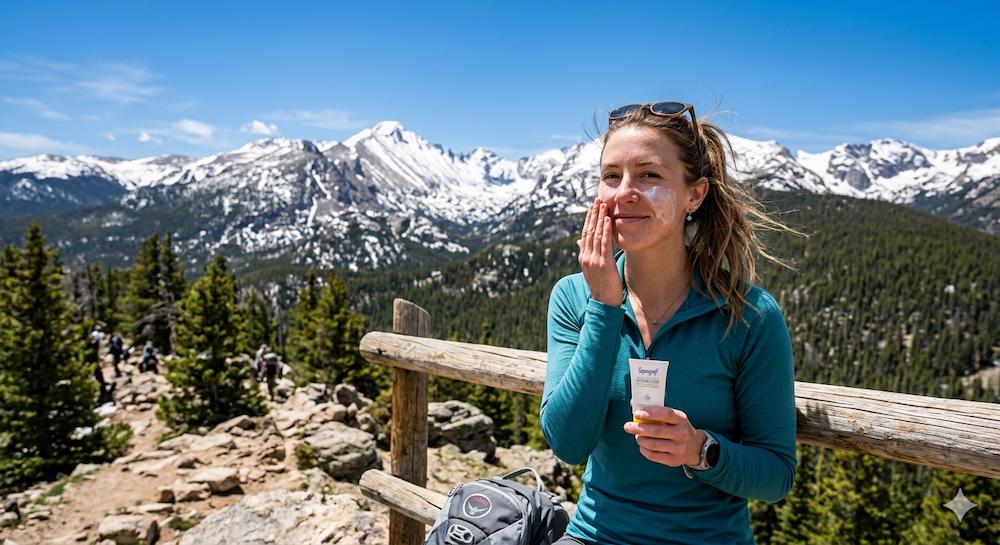
Sunscreen: Your Skin's Best Friend (Especially at Denver's Altitude)
Let's be honest — you can use all the fancy serums, the priciest peels, and the most luxurious moisturizers in the world, but if you skip sunscreen, your skin is doing all the hard work alone.
And here in Denver, that hard work is even harder. At 5,280 feet, UV exposure is roughly 25% stronger than at sea level, and Colorado averages 300+ days of sunshine a year. Translation: your skin needs SPF more than skin almost anywhere else in the country.
A Little Gen X Throwback
Back in the day, sunscreen looked very different:
- SPF 4 (basically wishful thinking)
- Tanning oil everywhere
- Aluminum foil reflectors for the "perfect tan"
- White zinc stripes on the nose

Thankfully, SPF has evolved. Today's sunscreens are lightweight, invisible, and actually feel good on your skin — no foil required.
What the Sun Really Does to Your Skin
UV exposure is the number one cause of premature aging. Too much sun can cause:
- Fine lines and wrinkles
- Dark spots and uneven tone
- Loss of firmness and elasticity
- An increased risk of skin cancer
Fun fact: Up to 90% of visible skin aging comes from sun exposure. That means most of the wrinkles, sun spots, and texture changes people try to treat in their 40s, 50s, and beyond are largely preventable — with consistent daily SPF.
Why Denver Skin Needs SPF Year-Round
Living at altitude isn't just a fun party fact — it's a real skin issue:
- Higher UV intensity: UV radiation increases roughly 4% for every 1,000 feet of elevation. At Denver's mile-high altitude, that adds up fast.
- Dry air: Colorado's low humidity weakens the skin barrier, which makes sun damage hit harder and recover slower.
- Snow reflection: Snow reflects up to 80% of UV rays, so ski days are essentially double exposure.
- Cloud myth: Up to 80% of UV rays pass straight through clouds. "It's overcast" is not a skip-day excuse.
Bottom line: in Denver, SPF isn't a summer thing. It's a daily thing.
Chemical vs. Mineral Sunscreen: What's the Difference?
Chemical Sunscreen
Absorbs UV rays before they damage your skin.
Pros
- Lightweight and often invisible
- Plays well under makeup
- Wide variety of formulas
Cons
- Can irritate sensitive skin
- May sting if it migrates near the eyes
- Needs 15–20 minutes to activate
- Some ingredients (like oxybenzone and octinoxate) are debated for their potential impact on coral reefs
Mineral Sunscreen
Sits on top of the skin and physically blocks UV rays using zinc oxide or titanium dioxide.
Pros
- Works the moment it's on
- Excellent for sensitive, reactive, or post-treatment skin
- Reef-safer formulas are widely available
Cons
- Can feel thicker
- May leave a slight white cast (though modern formulas have come a long way)
Which Sunscreen Is Right for You?
The best sunscreen is the one you'll actually wear every single day. That said, here's a quick cheat sheet:
- Sensitive or reactive skin → Mineral
- Lightweight, invisible feel → Chemical
- Just had a facial, peel, or microneedling → Mineral
- Breakout-prone → Look for non-comedogenic mineral or hybrid formulas
Consistency matters more than perfection.
SPF Rules We're Living By Now
- Wear SPF 30+ daily — yes, even if you're "just inside."
- Reapply every 2 hours when you're outdoors.
- Don't forget your neck, chest, ears, and the backs of your hands — these are the sneakiest aging zones.
- Use enough product — about a nickel-sized amount for the face, two finger-lengths for the neck and chest.
- Layer it last in your morning routine, after moisturizer and before makeup.
Frequently Asked Questions
Do I need sunscreen indoors? Yes. UVA rays pass through windows and contribute to aging and pigmentation, especially if you sit near a window or commute regularly.
What SPF should I use in Denver? SPF 30 is the daily minimum. For long outdoor activities — hiking, biking, gardening, ski days — go up to SPF 50 and reapply every two hours.
Is mineral or chemical sunscreen better after a facial? Mineral. It's gentler and starts protecting immediately, with less chance of stinging or irritating freshly treated skin.
How much sunscreen do I actually need? About a nickel-sized amount for the face, plus two finger-lengths down the neck and chest. Most people significantly under-apply, which lowers the SPF level your skin actually receives.
Can I skip sunscreen on cloudy days? No. Up to 80% of UV rays still reach your skin through cloud cover.
Final Thoughts
We may have survived the tanning oil and SPF-4 era, but now we know better. Sunscreen is your best anti-aging product, your glow protector, and your skin's daily armor — and at Denver's altitude, it's the single most important step in any routine.
Wear it every day. Your future skin will thank you.
Looking for a sunscreen that fits your skin type, or post-treatment care that pairs perfectly with daily SPF? Book a facial at Highlands Skin Studio and we'll build a routine that actually works for Denver skin.